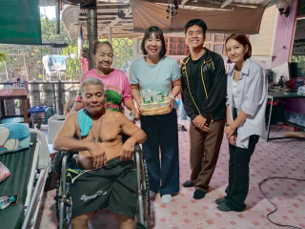
Krirk University has continued to support local community development through the project “Knowledge Management Development to Enhance the Potential of Children and Youth in Promoting Cultural Tourism in Lampho Subdistrict, Bang Bua Thong District, Nonthaburi Province.” The initiative aims to strengthen local capabilities, promote community products, preserve traditional knowledge, and create opportunities for sustainable economic development through collaboration between university researchers, local residents, schools, and local government.
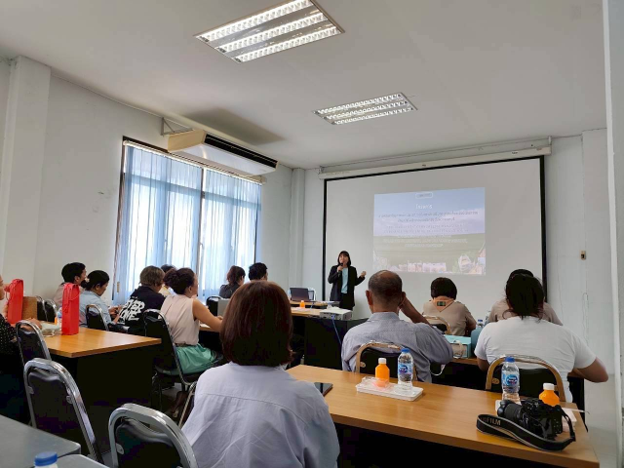
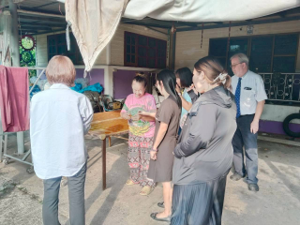
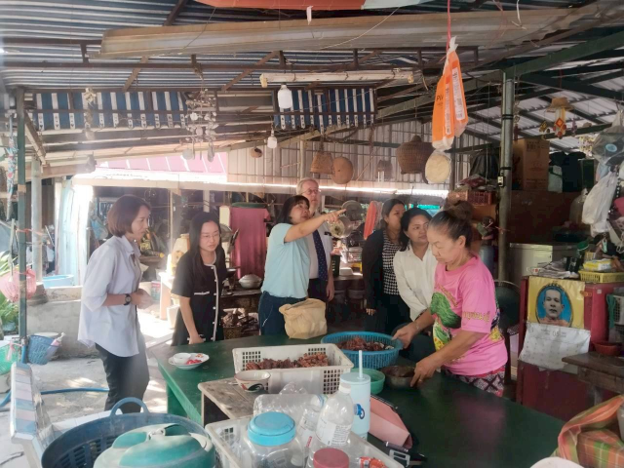
On 26 May 2026, Krirk University researchers organized a workshop entitled “Participatory Knowledge Management System Development” at Lampho Municipality Office, Nonthaburi Province. The activity brought together 18 participants, including six university researchers, seven community researchers, representatives from two local schools, and the local municipality. The workshop focused on strengthening the capabilities of experienced community researchers so that they could serve as mentors and community trainers in transferring local knowledge to children and young people.
Supporting Local Product Development
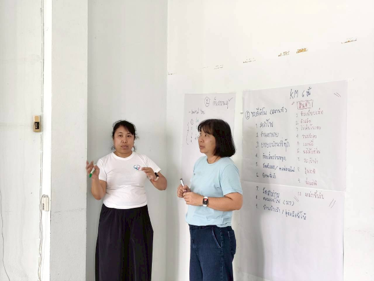
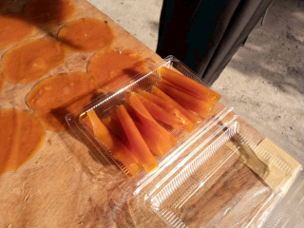
During the workshop, participants jointly identified local cultural resources, traditional knowledge, and community products that could be developed into practical learning activities. Local products included mushroom crackers, fresh vegetables, pandan salted eggs, baked goods, handmade bags, preserved fruits, coconut milk jelly, fruit drinks, and locally grown mangoes.
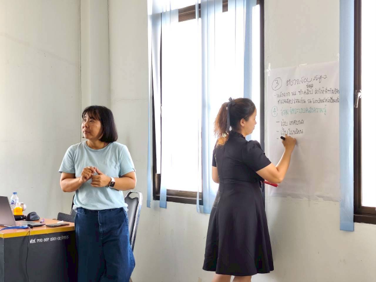
Following group discussions, three products were selected as pilot learning topics: mushroom crackers, pandan salted eggs, and coconut milk jelly. These products were chosen because they represent local knowledge and production practices and are suitable for hands-on learning activities.
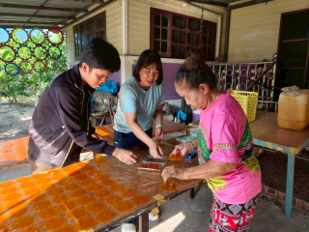
The project designed three practical learning stations, allowing children and young people to learn about production processes, participate in product-making activities, and develop skills in interviewing, information collection, and digital media production. By connecting young people with local knowledge holders and community producers, the initiative aims to preserve traditional skills and strengthen awareness of the economic potential of local products.
Building Community Capabilities through Participatory Knowledge Management
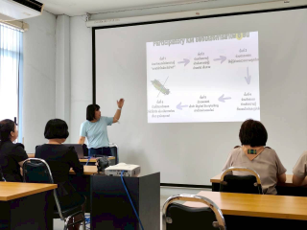
The workshop introduced a six-step participatory knowledge management process developed to suit the local community context. The process includes jointly defining knowledge topics, collecting information, validating knowledge, organizing knowledge, sharing knowledge, and applying it to create further opportunities.
Through this approach, community researchers and local knowledge holders will work together with children and young people to document traditional production methods, local history, cultural resources, and community experiences. The collected information will be organized into online knowledge databases and printed materials to improve access to local knowledge.
The project also encourages young people to develop digital storytelling content under the guidance of teachers, researchers, and community mentors. These activities aim to strengthen digital communication, storytelling, and promotional skills, enabling young people to contribute to the presentation of local products and cultural attractions.
Promoting Cultural Tourism and Local Economic Opportunities
In addition to community product development, the project aims to promote cultural tourism as another opportunity for local economic development. Participants jointly planned the development of cultural tourism routes that highlight important local attractions, traditional lifestyles, community history, and local products.
Children and young people are expected to take part as Junior Cultural Guides, introducing visitors to local attractions and sharing stories about the community. The project also proposed cooperation with Krirk University’s Chinese Language and International Programs to support foreign-language learning and provide opportunities for international students to participate in trial cultural tourism activities.
Through these activities, the project seeks to connect local cultural resources and community products with tourism promotion, creating opportunities for local residents to further develop community-based tourism activities.
Strengthening University–Community Collaboration for Sustainable Development
The workshop demonstrated Krirk University’s commitment to working with local communities through participatory research and knowledge sharing. By bringing together university researchers, community members, schools, and local government representatives, the initiative establishes a collaborative approach to preserving local knowledge and strengthening community capabilities.
Through practical product-learning activities, knowledge management, and cultural tourism development, Krirk University aims to help the Lampho community build a foundation for sustainable local economic activities while encouraging children and young people to become active contributors to their community’s future development.