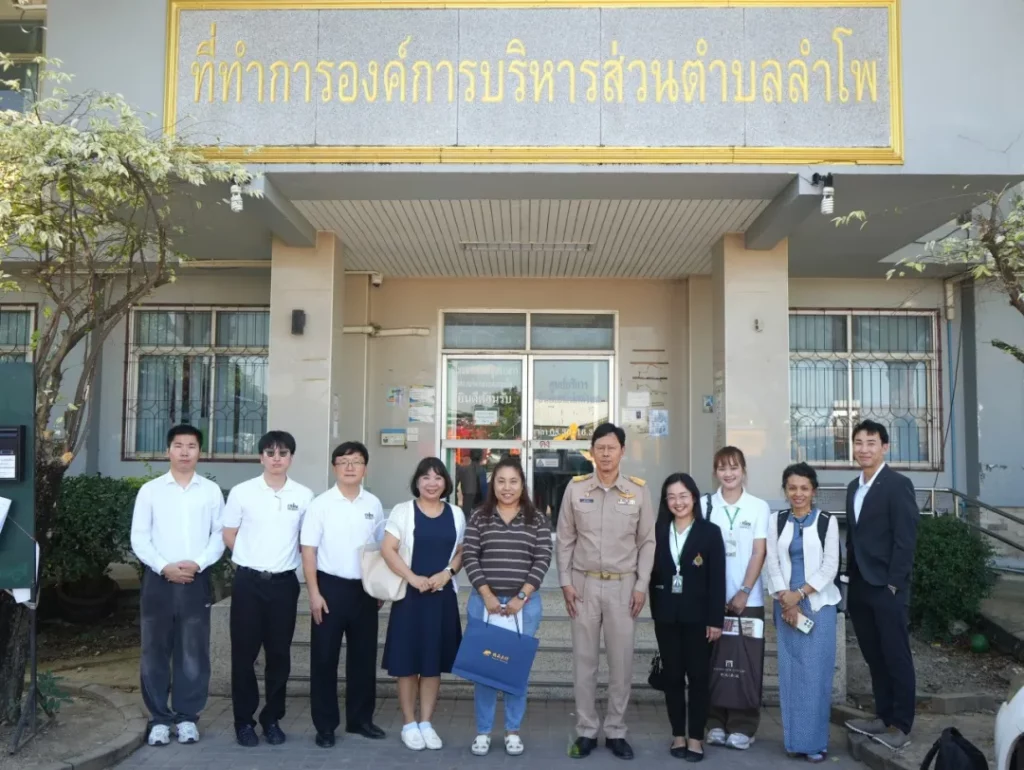
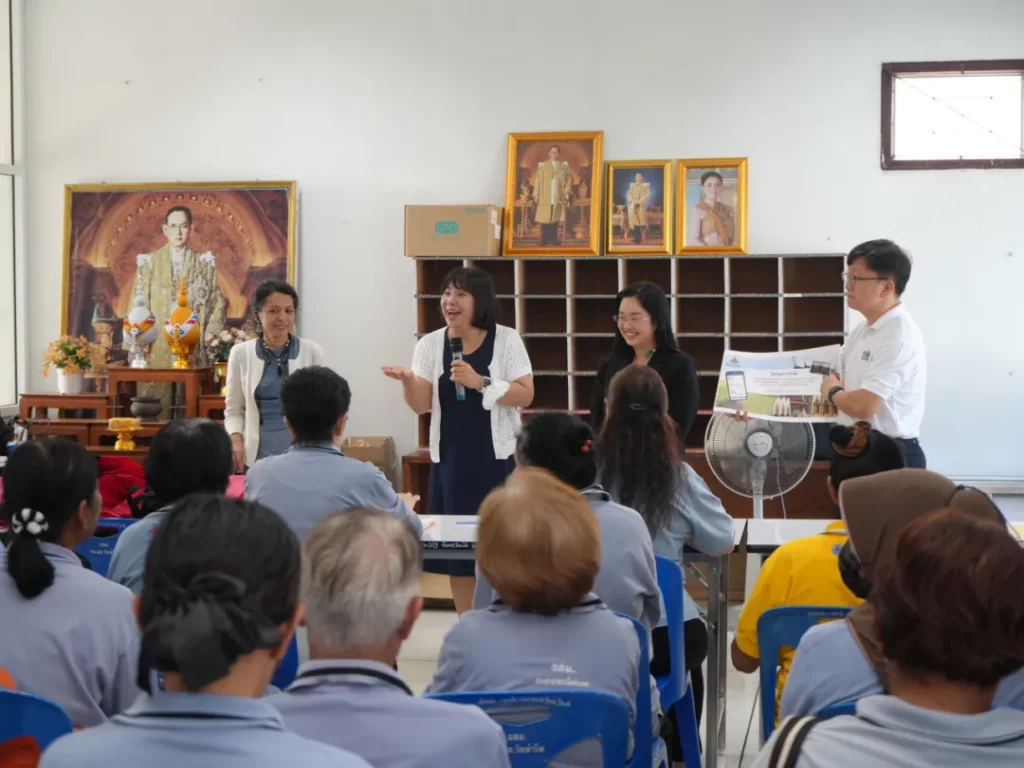
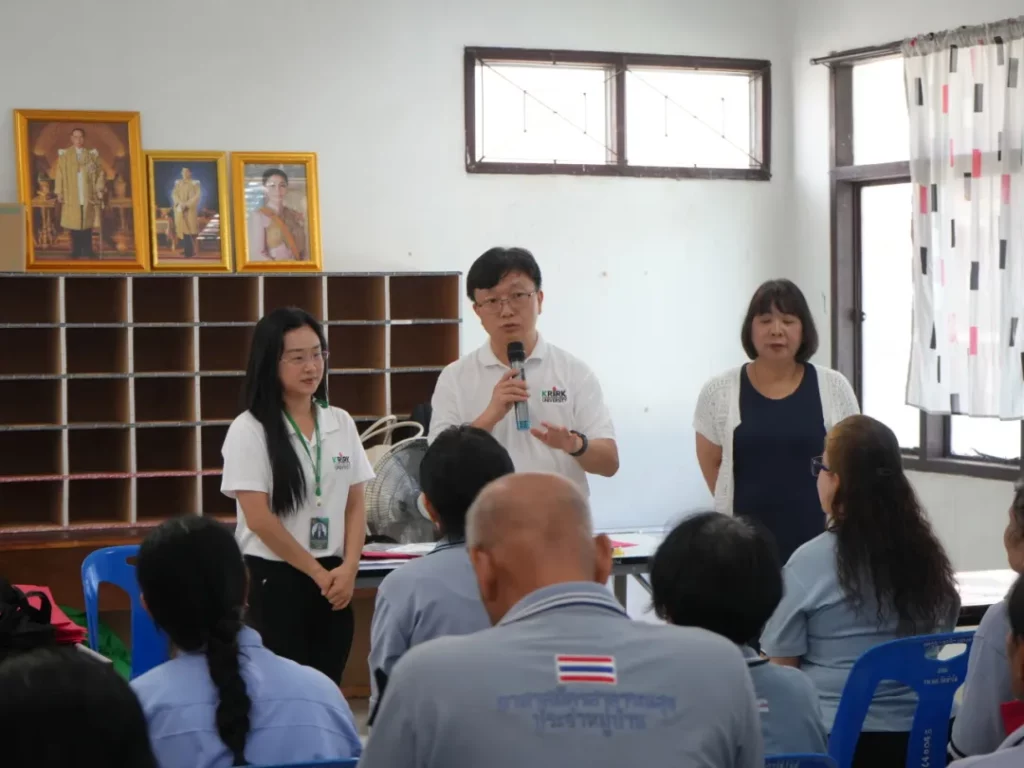
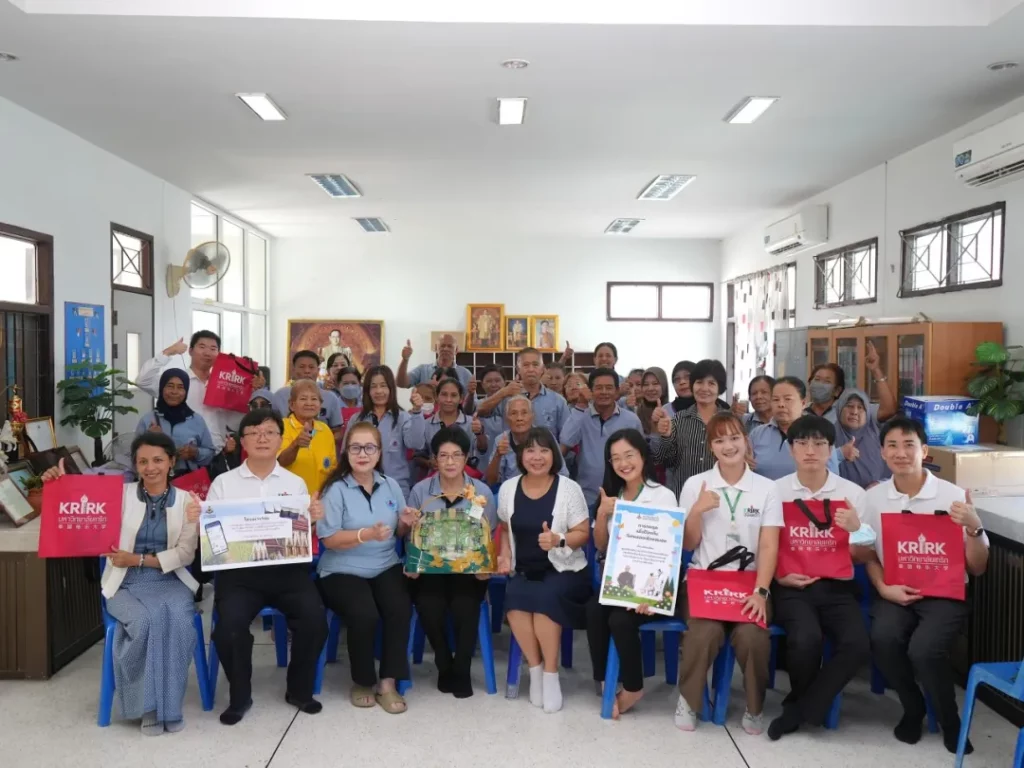
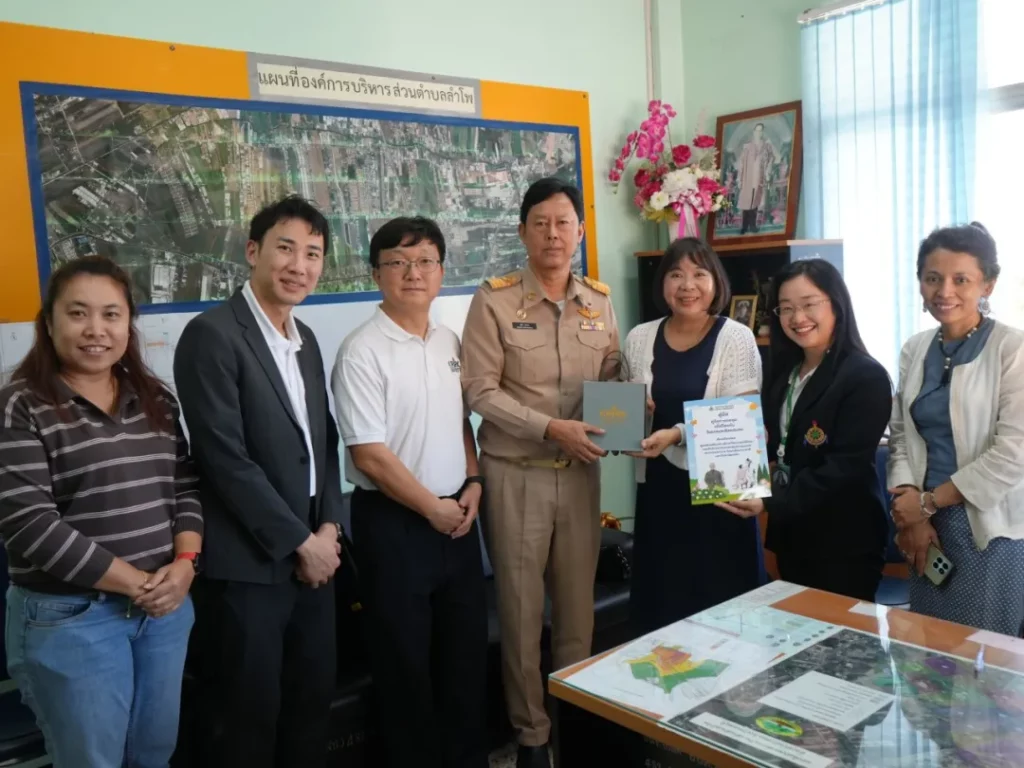
On 22 December 2025, a Krirk University research team visited Lam Pho Community, Thailand, to conduct community health-promotion and research collaboration activities. The team officially introduced and launched several community-focused research projects aimed at strengthening residents’ awareness of disease prevention and their capacity for health self-management through science- and technology-based interventions.
During the event, the research team presented two significant research projects to community leaders and volunteers. First, Dr. Kobkullaya introduced a new project funded by the National Research Council of Thailand (NRCT). Centred on “Youth Participation in Community Development,” the project will use systematic research and practical activities to promote young people’s involvement in community governance and sustainable development, helping to bring long-term vitality to the community.
Dr. Zhao Ye then provided a detailed introduction to an app-based disease-risk screening study, outlining its objectives, current progress, and pilot-study findings. Following an in-depth analysis of the pilot data, the research team found that approximately 50% of participants were identified by the screening tool as being at risk of cardiovascular and cerebrovascular disease, drawing considerable attention.
The findings also indicated relatively high risk levels among participants under 40 years of age: all male participants in this group were identified as at risk, while the corresponding proportion among female participants was 75%. These results underscored the importance of early screening and preventive interventions for disease risk.
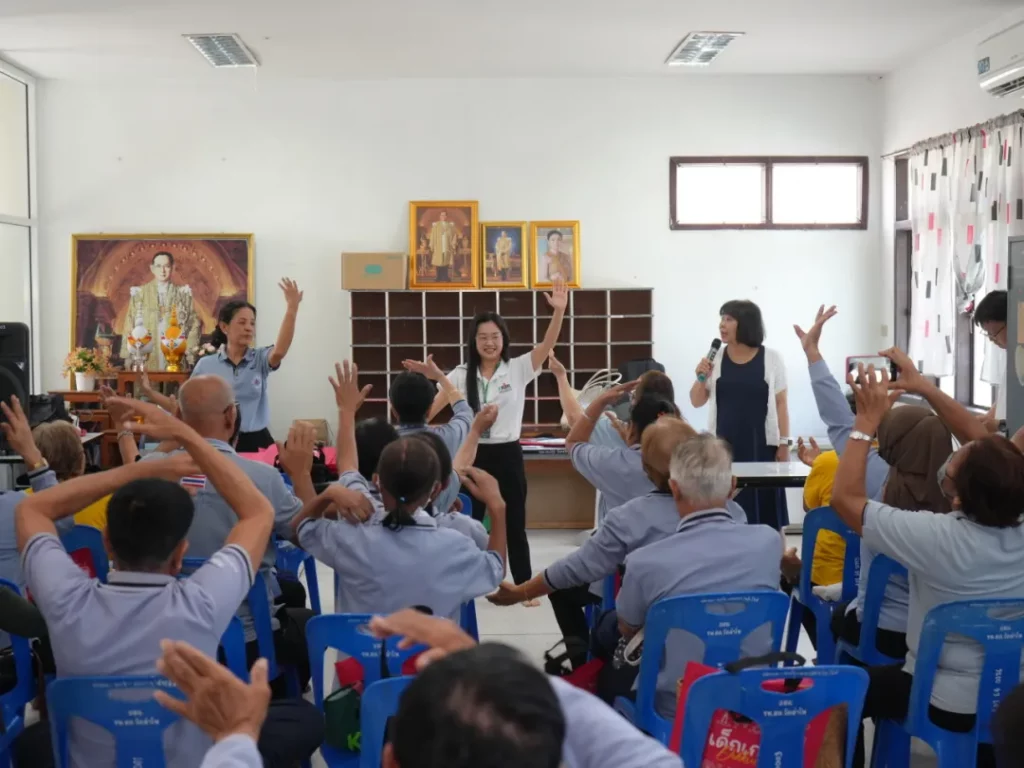
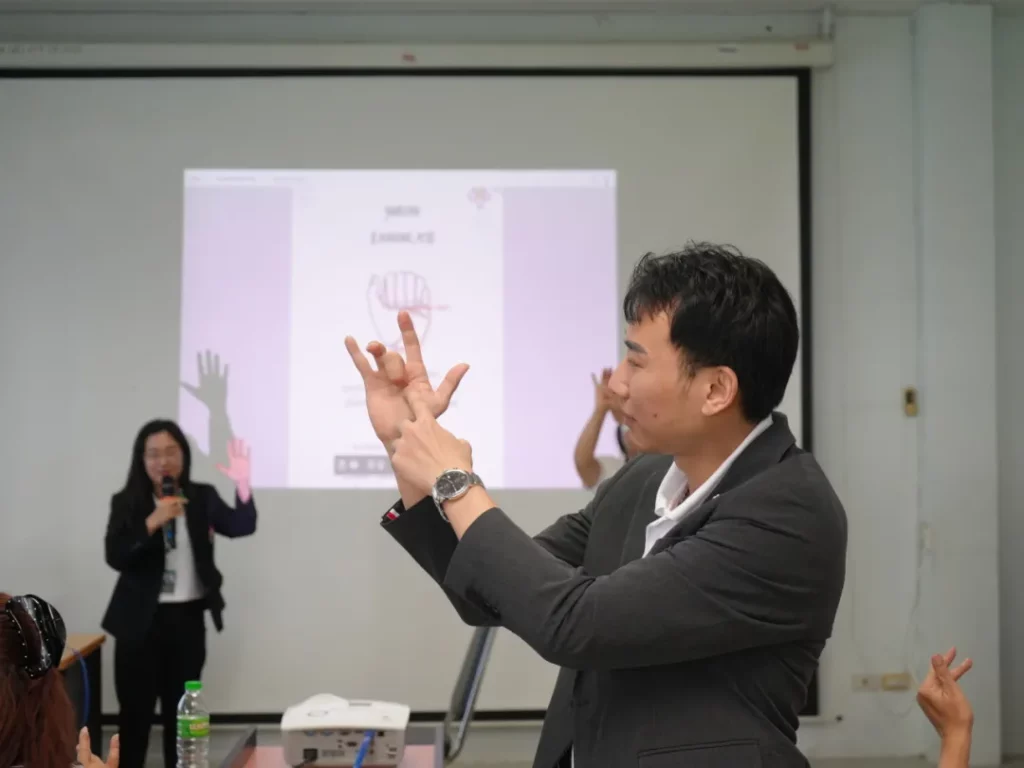
During the practical learning session, Dr. Suparata Kiartivich demonstrated simple therapeutic exercises designed for the app to community leaders and volunteers. She also demonstrated the “Piercing Hands” Tai Chi movement, which is intended to support cardiovascular and cerebrovascular health. The session helped participants understand how feasible, everyday forms of physical activity can promote cardiovascular health.
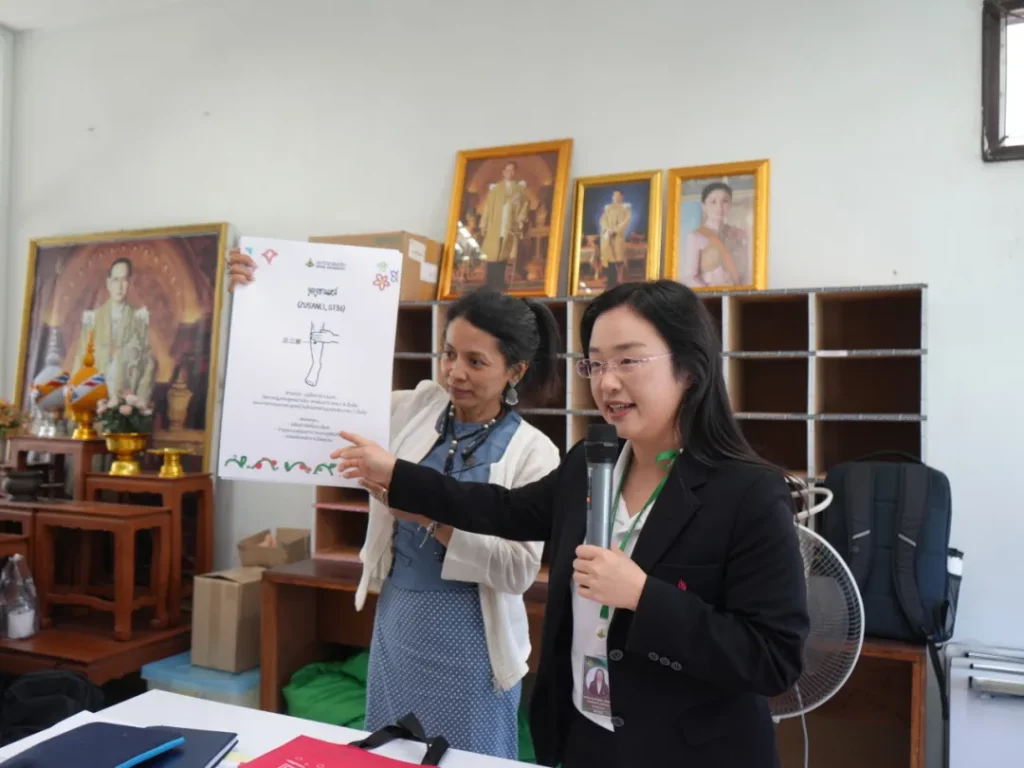
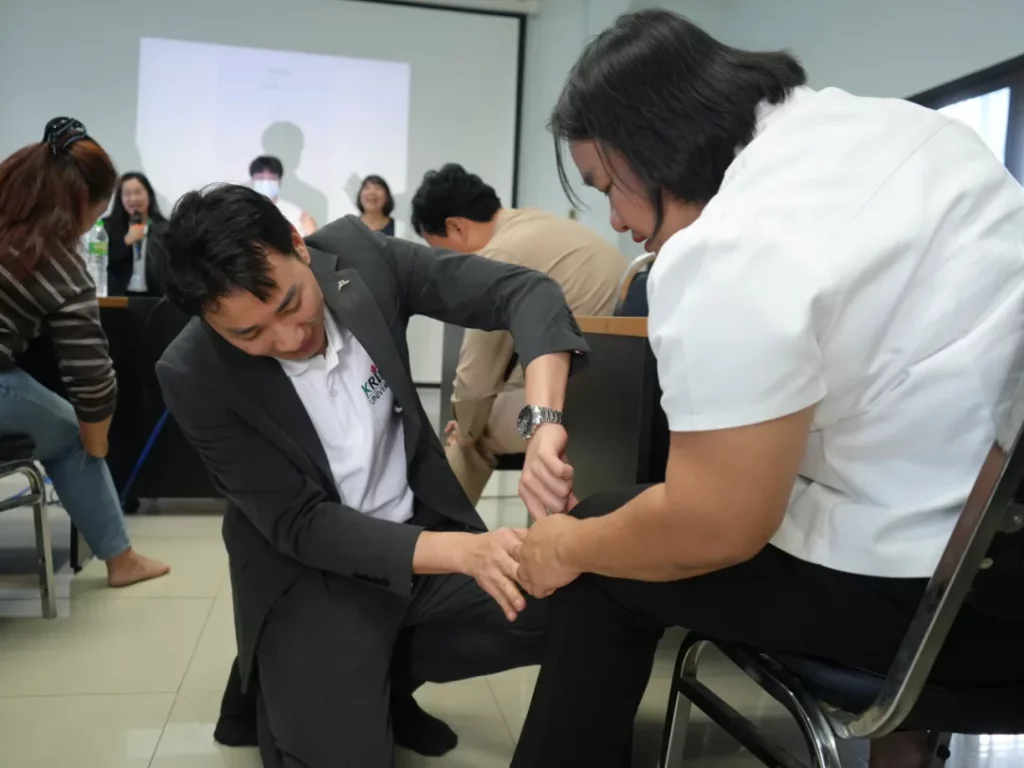
Dr. Suparata and Dr. Tup Kuang Ming subsequently introduced traditional Chinese acupressure techniques, highlighting selected acupoints for cardiovascular and cerebrovascular health support. A complementary acupressure guidebook was also distributed to community members to encourage continued use in their daily lives.
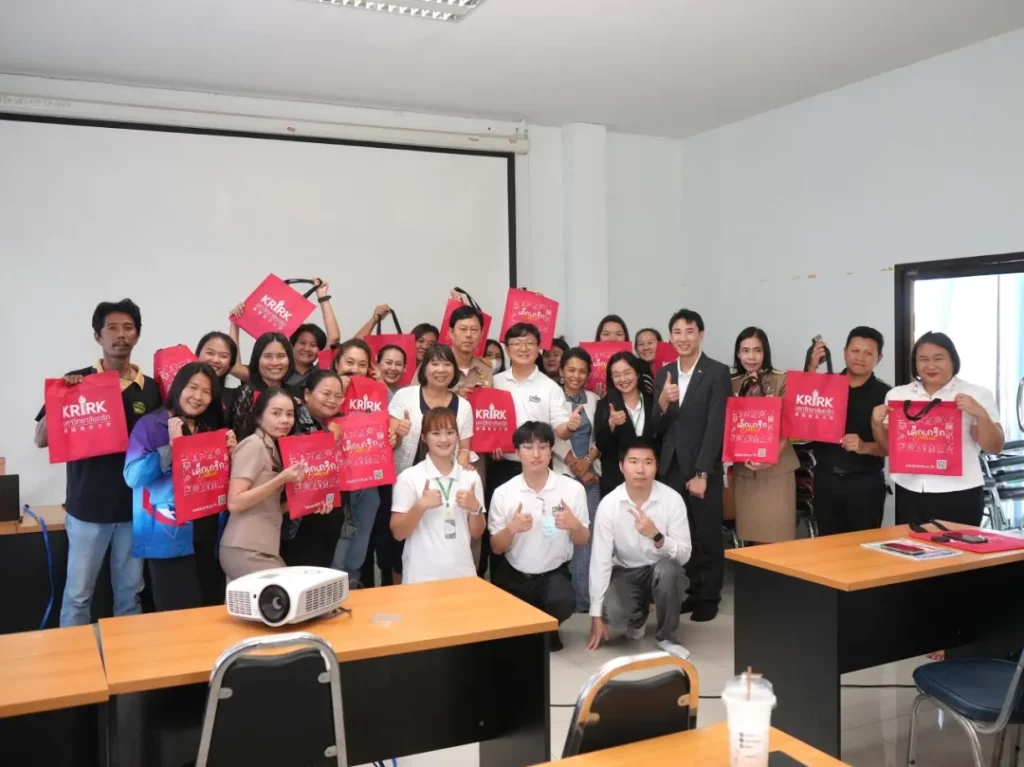
Community leaders and volunteers showed strong enthusiasm and active engagement throughout the event. Several community representatives noted that the initiative addressed practical local needs, and that app-based disease-risk screening could support earlier identification of potential health risks and timely preventive action.
Community leaders also expressed their full support for the Krirk University research team’s future work, with the shared goal of improving community health. This activity not only strengthened collaboration between the University and the community, but also laid a solid foundation for the future use of digital health tools and evidence-based prevention strategies at the community level.